
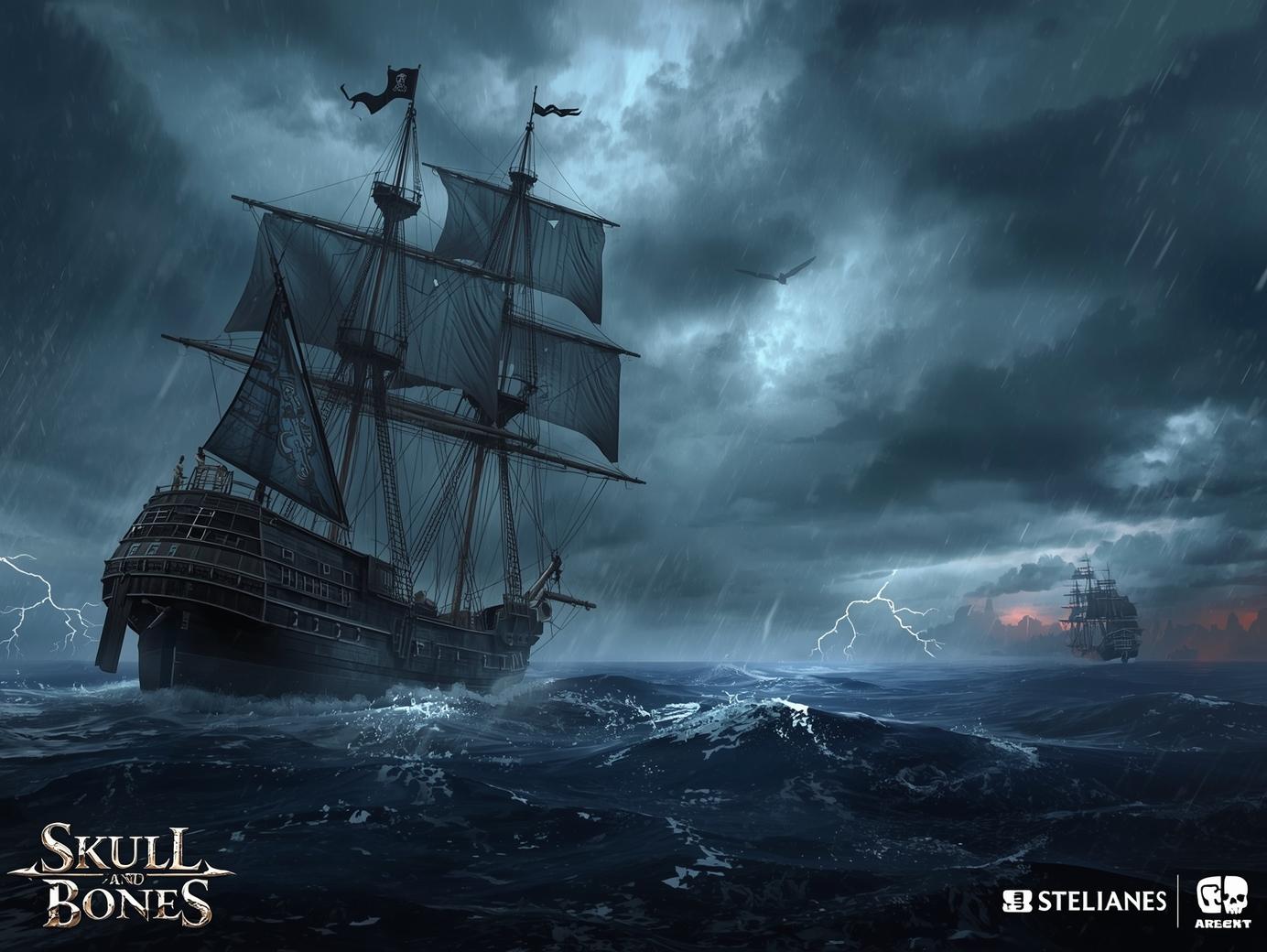
In the ever-evolving world of gaming, few upcoming titles have stirred as much curiosity and excitement as Ubisoft’s Skull and Bones. Set on the unpredictable and dangerous high seas, this open-world pirate adventure aims to deliver an authentic and immersive experience of naval warfare and seafaring survival. For years, players have awaited this game’s release, and now, it’s closer than ever to setting sail.
With its focus on exploration, ship combat, trading, and player-driven strategy, Skull and Bones represents a bold step forward for Ubisoft and for fans of open-world games. This upcoming title promises to merge the thrill of piracy with modern game development technology to create one of the most dynamic experiences in the genre.
The Origins of Skull and Bones
The story of Skull and Bones began in the wake of Ubisoft’s success with Assassin’s Creed IV: Black Flag, a game widely praised for its naval combat and pirate-themed exploration. Inspired by the overwhelming fan response to those mechanics, Ubisoft Singapore began developing Skull and Bones as a standalone experience focused entirely on the high-seas adventure that players loved.
Initially announced in 2017, the game underwent several development changes, creative redesigns, and delays. Ubisoft aimed to craft something beyond just another pirate game — a world that feels alive, unpredictable, and shaped by players’ actions. This long development journey has built anticipation and curiosity among gamers worldwide, especially in the USA, where open-world and adventure games enjoy a massive audience.
Setting and Storyline
Skull and Bones transports players to the Indian Ocean during the Golden Age of Piracy, a period where trade, greed, and power struggles defined global conflict. Rather than focusing on a single protagonist-driven narrative, the game emphasizes player freedom and progression, allowing you to carve your own destiny as a pirate captain.
Players start with a small ship and minimal resources, working their way up by completing contracts, raiding merchant vessels, trading loot, and upgrading their fleet. The central goal is to build a reputation strong enough to become the most feared pirate on the seas — a “Pirate Kingpin.”
This freedom-driven storytelling approach offers players the chance to create their own legend. Every battle, alliance, or betrayal influences the player’s standing in a world ruled by chaos, opportunity, and ambition.
Gameplay: A Deep Dive into Naval Combat and Exploration
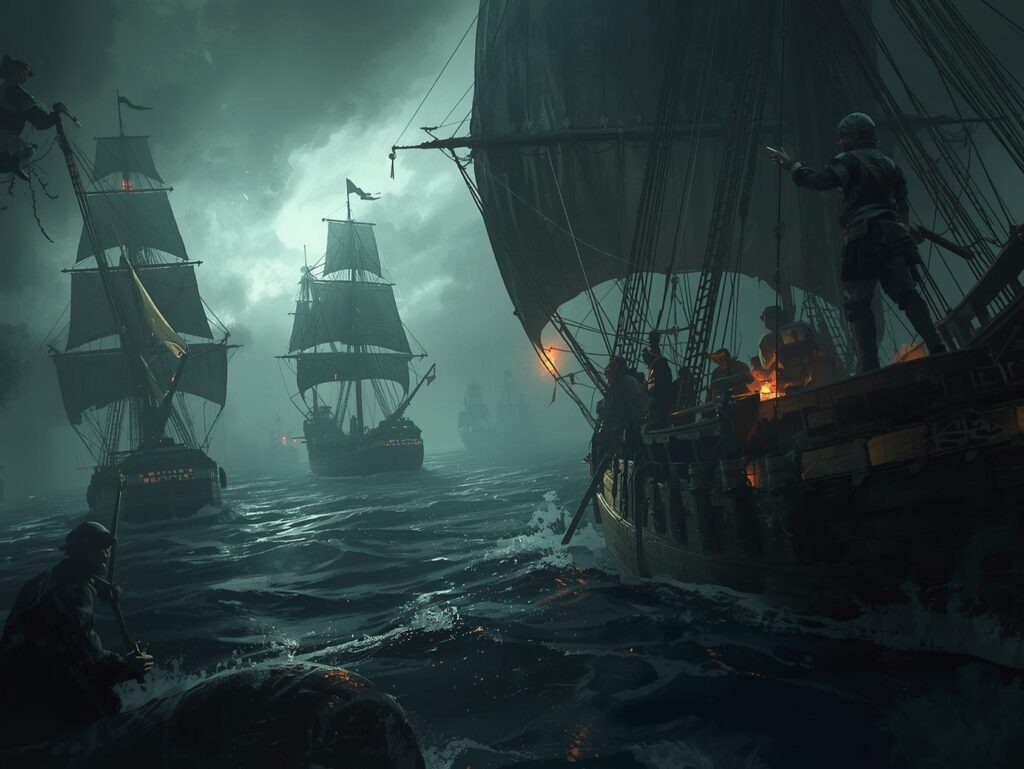
The core of Skull and Bones lies in its intense naval combat system, designed to be realistic and strategic rather than purely action-based. Players must manage their ship’s health, ammunition, wind direction, and crew morale during battles. Each ship type offers unique strengths, from heavily armored warships to fast, agile raiders.
Upgrading ships is central to progression. Players can customize cannons, hull designs, sails, and crew appearance to reflect their personal style and tactical approach. The combat encourages creativity, where positioning, timing, and precision are just as important as firepower.
Beyond combat, exploration plays a vital role. The open-world environment is filled with trading routes, enemy forts, treasure islands, and unpredictable weather conditions that can change the tide of battle in an instant. Players can also dive into trade systems, smuggling goods and balancing risk versus reward to expand their influence.
Multiplayer and Shared World Features
One of the most exciting aspects of Skull and Bones is its shared-world system, where players can interact, compete, or cooperate with others online. Unlike traditional single-player pirate adventures, this title blends solo and multiplayer elements seamlessly.
Players can choose to sail alone or form alliances with others to tackle larger challenges. However, alliances are fragile — betrayal and opportunism are part of the pirate’s life. Engaging in PvP naval battles allows players to test their skills against real opponents, creating high-stakes encounters where strategy determines victory.
Ubisoft has designed the multiplayer world to evolve dynamically, with global events and changing trade systems that keep the gameplay fresh. This online integration ensures that every session feels unique, unpredictable, and filled with potential for both glory and disaster.
Visuals, Sound, and Immersion
Skull and Bones is built using Ubisoft’s cutting-edge technology, delivering stunning graphics and realistic ocean physics. The water simulation system is among the most advanced ever seen in gaming, creating waves, storms, and reflections that feel authentic and dynamic.
The visual design immerses players in a beautifully rendered world filled with tropical islands, busy ports, and vast open seas. Every cannon blast, ship creak, and thunderstorm has been meticulously crafted to create a cinematic experience.
The soundtrack complements the immersive setting with powerful orchestral compositions and sea shanties that echo the spirit of piracy. Sound effects, from crashing waves to the roar of cannon fire, enhance the realism and intensity of battle.

Development Journey and Technological Advancements
Few games have had a development history as complex as Skull and Bones. Over the years, Ubisoft has reimagined the project several times, expanding its scope to align with the evolving expectations of modern gamers.
The game uses advanced AI systems for ship behavior, realistic trade economies, and reactive NPC interactions. These features create a world that feels dynamic — one where every player action has visible consequences. The Frostbite-like Anvil engine, adapted by Ubisoft, enables seamless transitions between exploration, combat, and trading.
Ubisoft’s goal is to ensure that Skull and Bones runs smoothly on next-generation consoles like the PlayStation 5 and Xbox Series X, as well as on PC. With enhanced performance capabilities, the game promises stunning visuals, improved loading times, and refined gameplay mechanics.
A Different Kind of Pirate Adventure
Unlike many pirate-themed games that focus heavily on narrative or humor, Skull and Bones aims for authenticity and realism. It captures the harsh and unpredictable life of piracy — survival, ambition, and the cost of power.
Players won’t find a romanticized version of pirates here. Instead, the game portrays the struggle to survive in a ruthless world where loyalty is fleeting and every decision matters. The lack of a traditional story structure allows for greater replayability, as no two players will experience the same journey.
Community and Anticipation in the USA
In the United States, Skull and Bones has become one of the most talked-about upcoming releases among open-world and action-adventure fans. American gamers, known for embracing freedom-driven experiences like Sea of Thieves and Assassin’s Creed, are eager to see how Ubisoft delivers on its promise of realism and depth.
The game’s multiplayer structure is expected to resonate strongly with U.S. audiences, who often gravitate toward competitive online gameplay and cooperative experiences. As streaming and eSports continue to grow, Skull and Bones could find a dedicated community of players sharing epic naval battles and strategies online.
Impact on the Future of Open-World Gaming
The release of Skull and Bones will mark a major milestone for Ubisoft and the open-world genre. It demonstrates the studio’s commitment to innovation and the blending of realism with entertainment.
Its focus on naval combat, trade systems, and environmental realism could influence future game design, pushing other developers to explore more specialized, simulation-driven worlds. It also sets the stage for new possibilities in player-driven storytelling — where choice, survival, and ambition dictate every outcome.
Expected Launch and Future Updates
While Skull and Bones has faced numerous delays, Ubisoft has assured fans that development is now in its final stages. The game is expected to launch soon across major platforms including PlayStation 5, Xbox Series X, and PC.
Post-launch, Ubisoft plans to support the game with continuous updates, new events, seasonal challenges, and expansion content. This long-term approach aims to keep the player base engaged and ensure that Skull and Bones evolves alongside its community