

The gaming industry has evolved from simple 8-bit graphics to vast open worlds with lifelike characters and immersive storytelling. Behind this transformation lies cutting-edge technology that powers every element of modern gaming. From advanced game engines and artificial intelligence to virtual reality and real-time rendering, technology is the heart and soul of game development. This article explores the technologies that shape today’s gaming experiences, providing insights into how developers bring imagination to life.
The Foundation of Game Development: Game Engines
Every video game begins with a powerful tool known as a game engine. Game engines provide the framework developers use to build, design, and manage a game’s assets and mechanics. The most widely used engines today include Unreal Engine, Unity, CryEngine, and Godot.
Unreal Engine, developed by Epic Games, is known for its stunning graphical capabilities and is often used for AAA titles like Fortnite and Final Fantasy VII Remake. Unity, on the other hand, offers flexibility and accessibility, making it ideal for both indie developers and large studios. These engines handle physics, lighting, animation, and rendering, reducing development time while enhancing visual fidelity and performance.
Game engines also provide cross-platform support, allowing games to run seamlessly on PCs, consoles, and mobile devices without rewriting code for each system. This adaptability has been instrumental in the global expansion of gaming.
Artificial Intelligence: Making Games Smarter
Artificial intelligence (AI) plays a vital role in making games more interactive and engaging. AI enables non-player characters (NPCs) to react intelligently to player actions, making every encounter unique. In competitive games like Valorant or Call of Duty, AI-driven bots are used for training and testing, replicating human-like tactics and responses.
In open-world games such as Red Dead Redemption 2 or The Witcher 3, AI systems control animal behaviors, weather patterns, and civilian routines, creating a world that feels alive. Modern AI technologies like machine learning are also being used to personalize gameplay by adapting difficulty levels based on player performance.
The integration of AI doesn’t stop at gameplay. Developers use it to automate quality assurance, identify bugs, and optimize game performance, streamlining the production process.
Physics Engines: Realism in Motion
Another crucial aspect of modern game development is physics simulation. Physics engines, such as NVIDIA PhysX and Havok, govern how objects interact within the game world. These systems ensure that explosions look authentic, objects move naturally, and characters respond believably to their surroundings.
For example, when a building collapses in a game like Battlefield, the debris falls according to realistic gravitational rules rather than scripted animations. Similarly, car racing games like Forza Horizon rely on precise physics models to replicate real-world driving dynamics, tire friction, and weather effects.
By combining physics with advanced animation systems, developers achieve cinematic realism that enhances immersion and player engagement.
Graphics and Rendering Technologies
Modern gaming visuals have reached new heights thanks to advancements in real-time rendering and graphics processing units (GPUs). Technologies like ray tracing simulate how light interacts with objects, creating reflections and shadows that mimic real-life environments.
Ray tracing has become a benchmark for next-generation visuals, used extensively in games like Cyberpunk 2077 and Minecraft RTX. GPUs from NVIDIA and AMD now support real-time ray tracing, allowing developers to achieve cinematic-quality graphics on consumer hardware.
Another breakthrough is DLSS (Deep Learning Super Sampling), an AI-driven technology developed by NVIDIA that boosts performance without sacrificing image quality. These innovations allow players to experience highly detailed worlds at smoother frame rates.
Virtual Reality (VR) and Augmented Reality (AR)
Virtual reality and augmented reality are revolutionizing how players experience games. VR immerses users in fully interactive environments through headsets like the Oculus Quest or PlayStation VR, while AR overlays digital elements onto the real world using mobile devices or glasses.
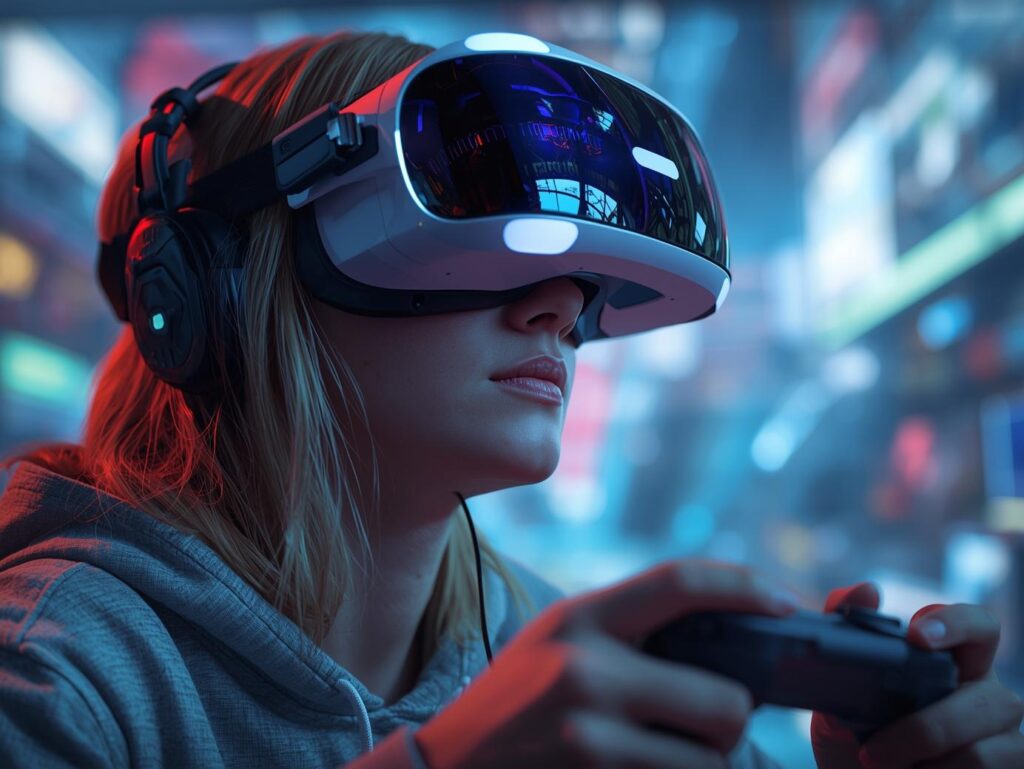
Developers use specialized engines like Unreal and Unity to design VR-compatible worlds that react naturally to player movement. Games such as Half-Life: Alyx have demonstrated the full potential of VR storytelling, offering experiences that traditional screens cannot match.
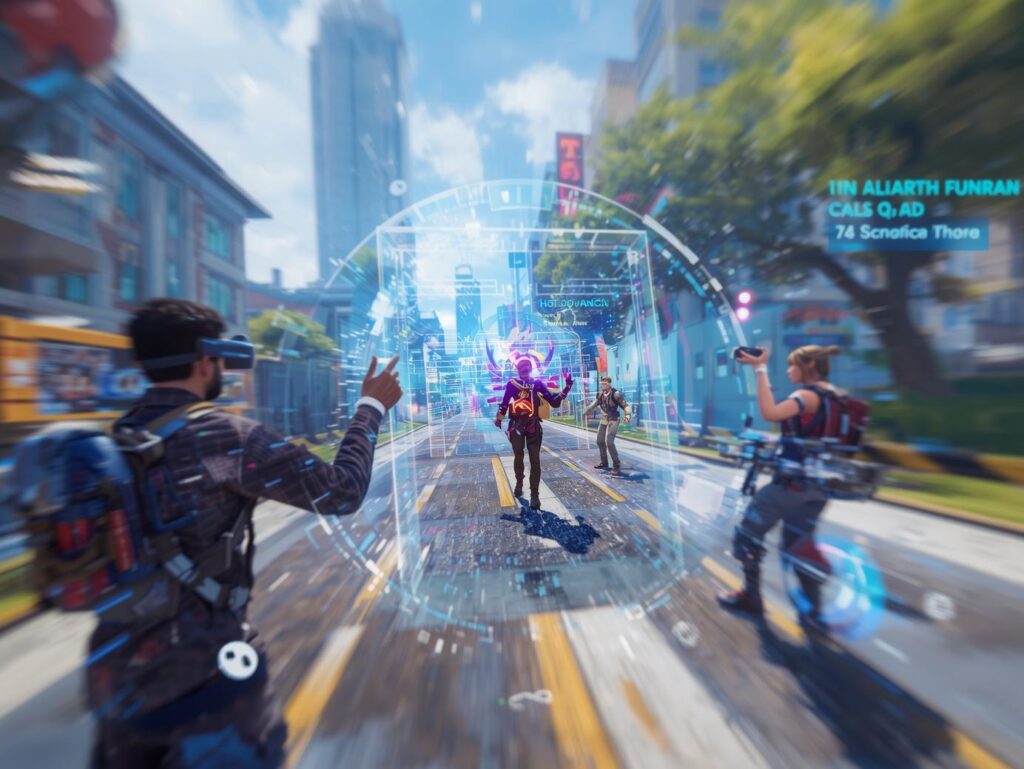
AR gaming, popularized by titles like Pokémon GO, combines technology and the real world, creating engaging social experiences. With continuous advancements in sensors, motion tracking, and haptic feedback, the future of immersive gaming looks limitless.
Motion Capture and Animation
The realism in modern gaming owes much to motion capture (mocap) technology. Actors wear suits fitted with sensors that track body movements and facial expressions, translating them into digital character animations. This technology enables lifelike performances, enhancing storytelling and emotional depth.
Games like The Last of Us Part II and God of War: Ragnarök showcase how mocap brings characters to life with human-like emotions and gestures. Combined with facial recognition systems and AI-driven animation, developers can achieve unprecedented realism in both cinematic and gameplay sequences.
Cloud Gaming and Streaming Technology
Cloud technology is reshaping how games are delivered and played. Platforms like NVIDIA GeForce Now, Xbox Cloud Gaming, and Amazon Luna allow players to stream games directly from the cloud without needing powerful hardware.
This innovation relies on high-speed internet and remote servers to render games, making high-end experiences accessible to more players worldwide. Developers benefit from this model as well, since it simplifies updates, reduces piracy risks, and expands global reach.

Cloud computing also supports online multiplayer infrastructure, allowing seamless cross-platform play and real-time updates. As internet speeds improve, cloud gaming is expected to become a dominant force in the industry.
Sound Design and Audio Technology
Audio plays a crucial role in immersion, and technological advances in 3D audio and spatial sound have transformed how players experience games. Modern engines integrate realistic soundscapes that respond to the player’s position and environment.
For example, footsteps in a shooter may sound different depending on surface material or distance, helping players locate enemies more accurately. Technologies like Dolby Atmos and Tempest 3D AudioTech deliver surround sound that reacts dynamically to the game world.
Game developers also use procedural audio generation, where sounds are created algorithmically rather than pre-recorded, allowing for infinite variations and richer experiences.
Networking and Online Infrastructure
Online multiplayer gaming depends heavily on reliable networking technologies. From matchmaking systems to anti-cheat mechanisms, developers invest significantly in building secure and scalable online infrastructures.
Technologies such as dedicated servers, peer-to-peer networking, and real-time voice chat ensure smooth gameplay across continents. Esports titles like Valorant, Fortnite, and Call of Duty rely on optimized netcode to minimize lag and maintain competitive balance.
With the advent of 5G networks, mobile and cloud gaming experiences are becoming faster and more stable, opening new opportunities for competitive play and large-scale multiplayer experiences.
The Future of Game Development Technology
The future of gaming lies in the fusion of multiple emerging technologies. Artificial intelligence will continue to revolutionize both gameplay and design automation, while blockchain and NFTs could reshape game economies.
Virtual production, already used in film and TV, is finding applications in game development, enabling developers to create realistic environments in real-time. Quantum computing may eventually accelerate simulation complexity beyond current limitations, leading to truly limitless virtual worlds.
As technology advances, the line between reality and digital entertainment will continue to blur, delivering more immersive and emotionally resonant gaming experiences.